Thailand Economy 2025: Growth Despite Global Risks
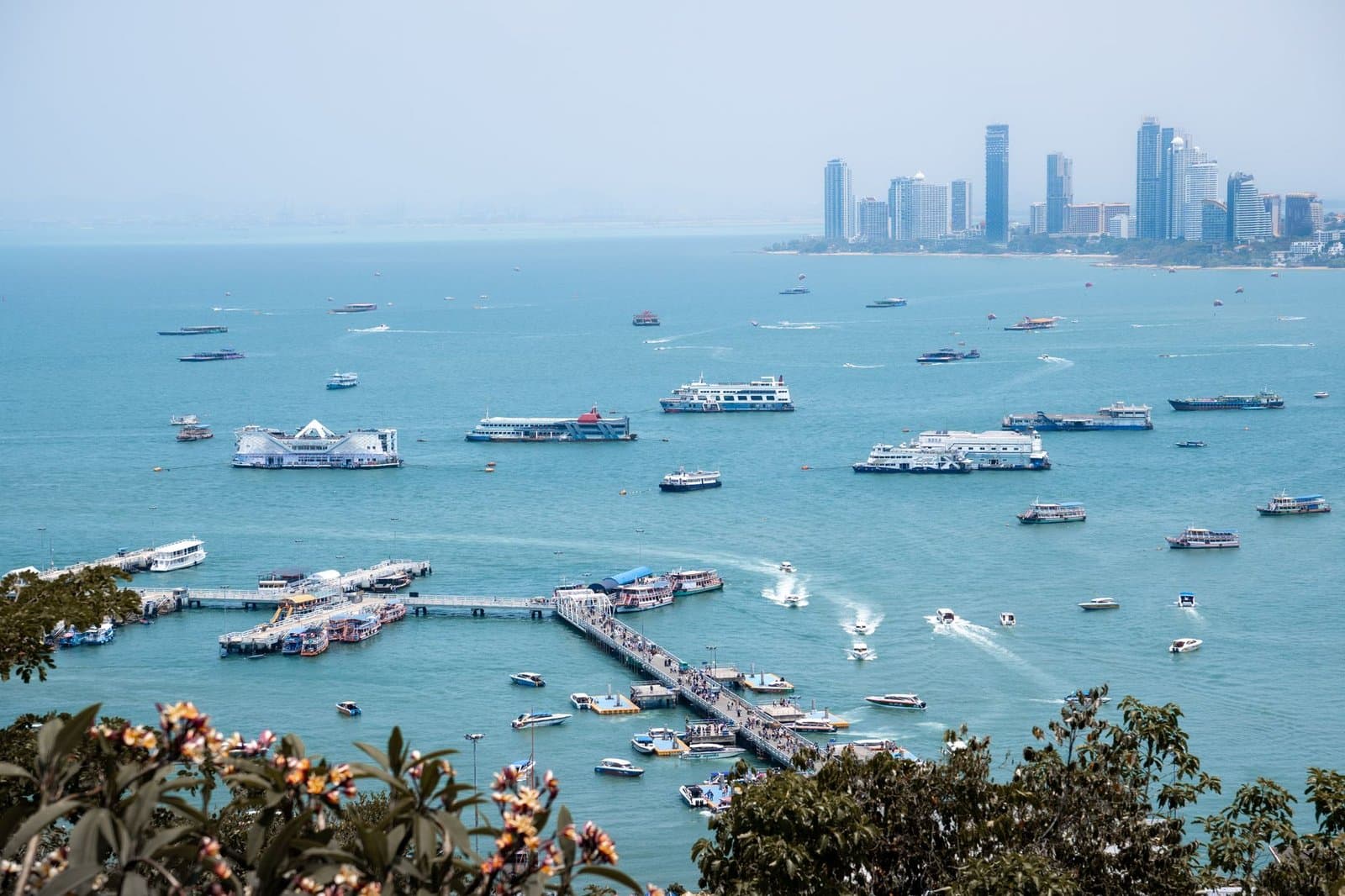
Thailand's economy is what you get when a country actually manages to hold its ground. While geopolitical tensions rattled global supply chains and pushed up production costs, Thailand posted its 23rd consecutive month of export growth in May. Total exports reached $34.3 billion, up 10.6% year-on-year. Foreign reserves sit at $287.5 billion. Headline inflation came in at 2.79%. Not a fairy tale, but genuinely stable.
Exports and Industry: The Core Holds
The manufacturing PMI printed at 52.6 in May, barely down from 52.7 in April, but well above the 50-point threshold that separates expansion from contraction. The Thai Index of Business Sentiment (TISI) slipped from 85.3 to 84.7, reflecting private-sector concern about rising costs and softer domestic momentum, a dip rather than a fall.
Export gains were broadly distributed: the US up 33.5%, ASEAN-5 up 29.7%, the EU up 12.1%, Japan up 11.7%. Government debt stands at 66.6% of GDP, within the statutory ceiling. For investors looking for an economy that does not overreact to every geopolitical headline, Thailand makes a reasonable case.
Domestic Demand: Cars Move, Confidence Stalls
New car registrations rose 15.2% year-on-year in May, motorcycles up 2.9%. Capital goods imports jumped 19.6% annually, pointing to continued business investment in equipment and production capacity.
Consumer confidence dropped below neutral to 49.5 in May, from 50.6 in April. Global oil prices and accumulated geopolitical anxiety are the named culprits, affecting household spending directly. Cement sales grew 3.9% year-on-year, but declined 1.3% after seasonal adjustment, sending a mixed signal on the construction pipeline.
Tourism Up, Property Transactions Quieter
Two numbers matter for anyone watching the Pattaya housing market.
May brought 2.35 million foreign tourists to Thailand, up 3.5% year-on-year and 5.9% after seasonal adjustment. Consistent visitor inflows directly support rental demand in Pattaya, where apartment occupancy closely tracks tourist arrival figures.
At the same time, property transaction taxes fell 8.6% year-on-year. The market has slowed. For those tracking real estate investment in Pattaya, a quieter transaction environment historically means less competition for quality units and more room to negotiate on price.
What This Means for Buyers and Renters in Pattaya
Thailand is showing genuine resilience. A $287.5 billion reserve buffer, 23 months of uninterrupted export growth, and a core inflation rate of just 0.92% describe an environment where the baht and the property market are unlikely to face sharp disruptions.
The May dip in transactions reads as a pause, not a reversal. Tourism is recovering, infrastructure is expanding, and international capital continues to assess the region. For those considering buying property in Pattaya, the current moment combines macro stability with a less crowded market. A good time to look without the usual pressure.