Bangkok–Pattaya High-Speed Rail: 45 Minutes from Bangkok Airports
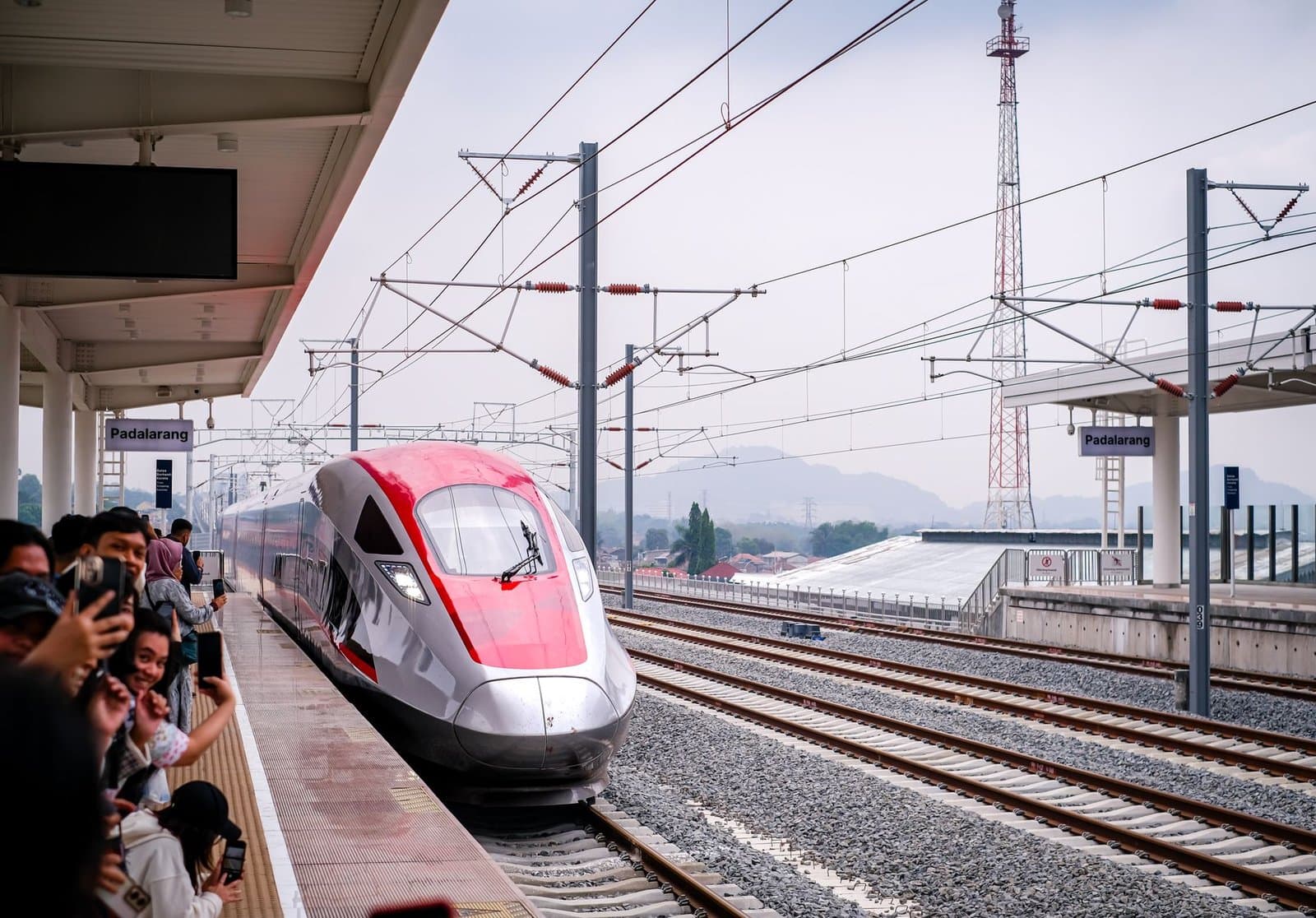
Three hours on Highway 7, or 45 minutes on a train travelling at 250 kilometres per hour. The Thai government has signed an agreement to build a 220-kilometre high-speed rail line connecting Bangkok's airports with U-Tapao near Pattaya. The project sits within the Eastern Economic Corridor framework, with construction costs estimated at 230 billion baht.
The consortium and the deal
The line will be built by a consortium led by Thai conglomerate Charoen Pokphand Group (CP) and China Railway Construction Corporation. Partners include Italian-Thai Development, CH. Karnchang, Bangkok Expressway and Metro (operator of Bangkok's underground network), and several Japanese banks. EEC Secretary-General Kanit Saengsuphan said private sector co-investors would be invited to join the project, helping to ease the burden on public finances.
The project gained additional momentum after U-Tapao airport completed an upgrade to become Thailand's third international gateway. The rail line will connect all three airports: Suvarnabhumi and Don Mueang in Bangkok, and U-Tapao on the Eastern Seaboard, transforming the latter from a backup airfield into a genuine hub.
Route, speed, and fares
Trains will operate at 250 km/h. The journey from Makkasan station in central Bangkok to Pattaya will take around 45 minutes, with fares set at approximately 270 baht per person. Continuing on to U-Tapao will cost around 330 baht.
For comparison, the same trip by car takes two to three hours, and anyone who has driven Highway 7 on a Friday evening understands why 45 minutes is a different proposition entirely.
Phase one covers the three-airport connection. Phase two will extend the line to Chanthaburi province, bringing the total journey time to 120 minutes for the full route.
The Eastern Economic Corridor: the bigger picture
The Eastern Economic Corridor (EEC) is Thailand's flagship regional development initiative, designed to attract manufacturing and technology investment into the zone east of Bangkok. High-speed rail is one of its headline infrastructure commitments. Cutting the Bangkok-Pattaya connection to under an hour effectively makes the coastal city a commutable satellite of the capital.
Foreign investor interest in Pattaya real estate was already strengthening before this announcement. A connectivity upgrade of this scale tends to be exactly the catalyst that turns interest into signed contracts.
What this means for buyers and renters
A 45-minute rail connection rewrites the calculation for several buyer profiles:
Bangkok workers who want to live by the sea: Pattaya becomes a practical full-time residence, not just a weekend escape.
Rental investors: improved airport access strengthens the short-stay letting market significantly.
Owner-occupiers: a much wider range of the city's districts becomes practical without sacrificing access to the capital.
Infrastructure upgrades of this magnitude typically feed through into property prices before the first train arrives. New developments in Pattaya in well-connected locations tend to move first. If you are considering buying property in Pattaya or evaluating the investment case for the region, this is a useful moment to map how different districts are positioned. Pattaya is not uniform: each area carries its own buyer profile, pricing dynamics, and proximity to the planned rail route.